

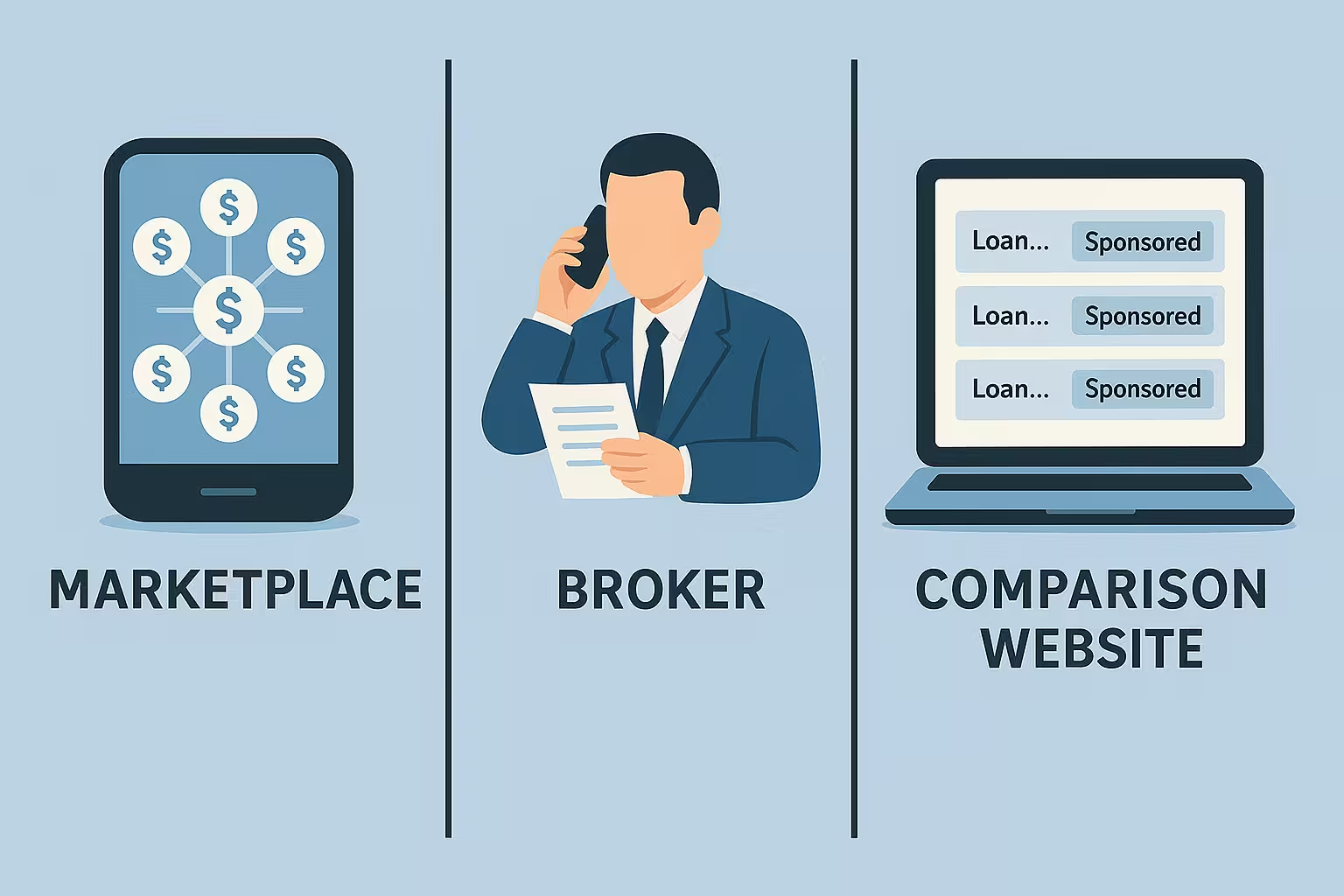
What is a loan marketplace and how are you different from a comparison website or from using a broker?
Add FindTheLoan as a preferred source, and Google, when searching, will include our website in its search.
Written at: 27 Sep, 2024
Last Updated: 26 Sep, 2025
Review websites
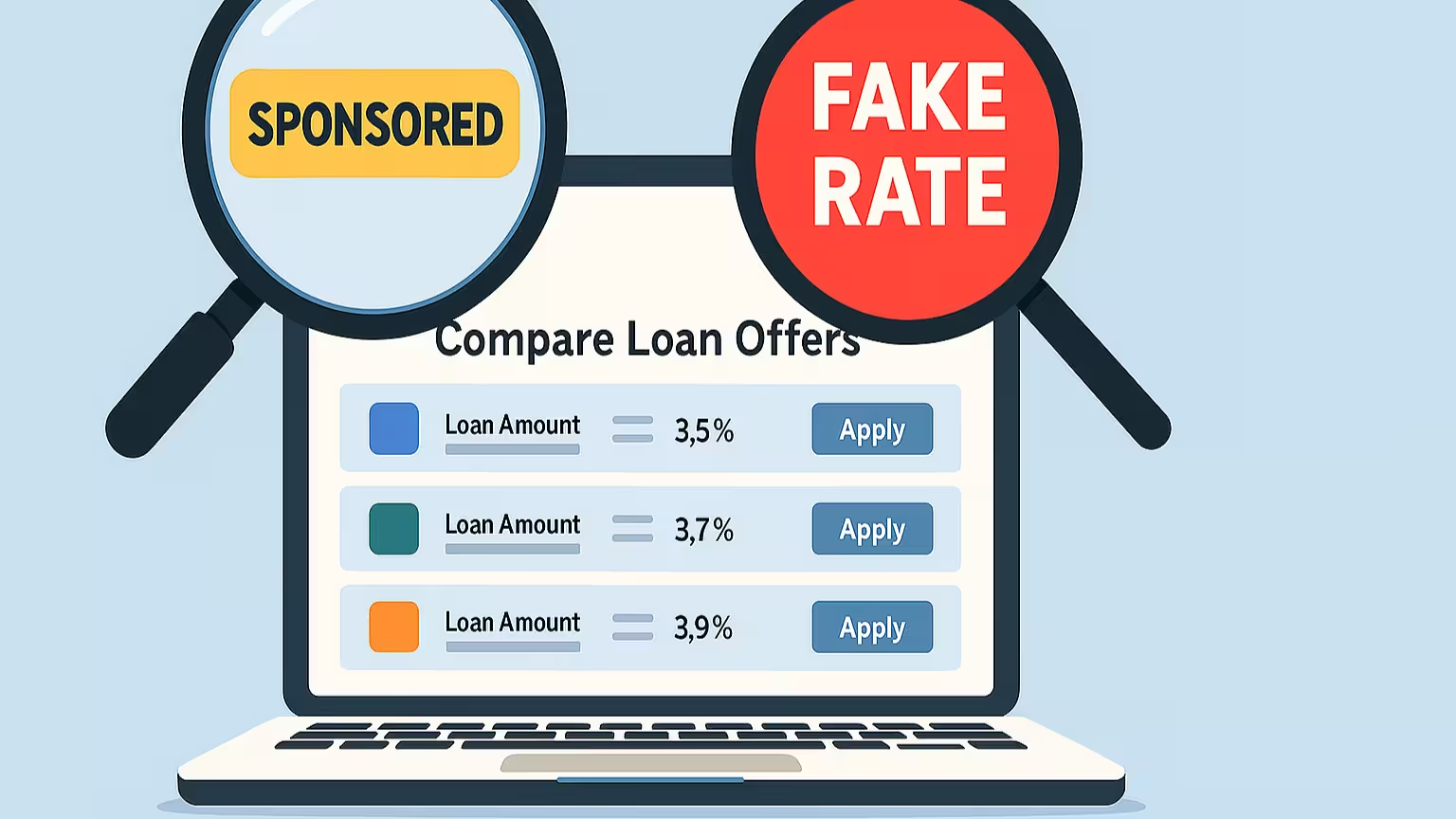
can help you choose the best credit card, the best savings account, and so on with their extensive research on standardized products. But without access to your individualized profile, it might not be very helpful when it comes to taking a loan. “Up to $$$” and “as low as x%” mean nothing if they do not apply to you.
Unlike factual information that applies to everyone, which a writer can just research - such as a mile or point earned for each dollar spent - how much you can borrow and the interest rate you will pay vary from individual to individual due to each's credit score & profile. Without applying directly to the lenders and providing them with all the documents required to make an assessment, you just cannot know for sure what they can offer you.
This is often why, when you look for it, you will see disclaimers like these hidden somewhere:
"meant for illustrative purposes only." "Recommended rates only; you may or may not be eligible based on your credit profile."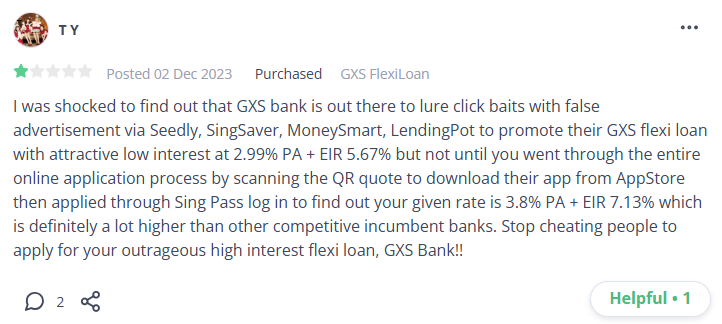
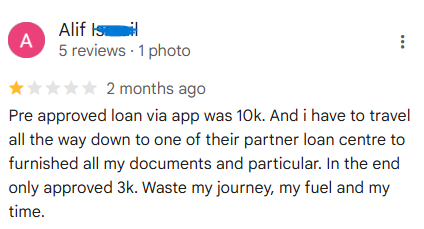
Credit:This is a publicly made comment that you can find on review websites like Google, Seedly, etc.
Think about it—if one lender were always the cheapest for every profile, the rest would have closed down by now, right?
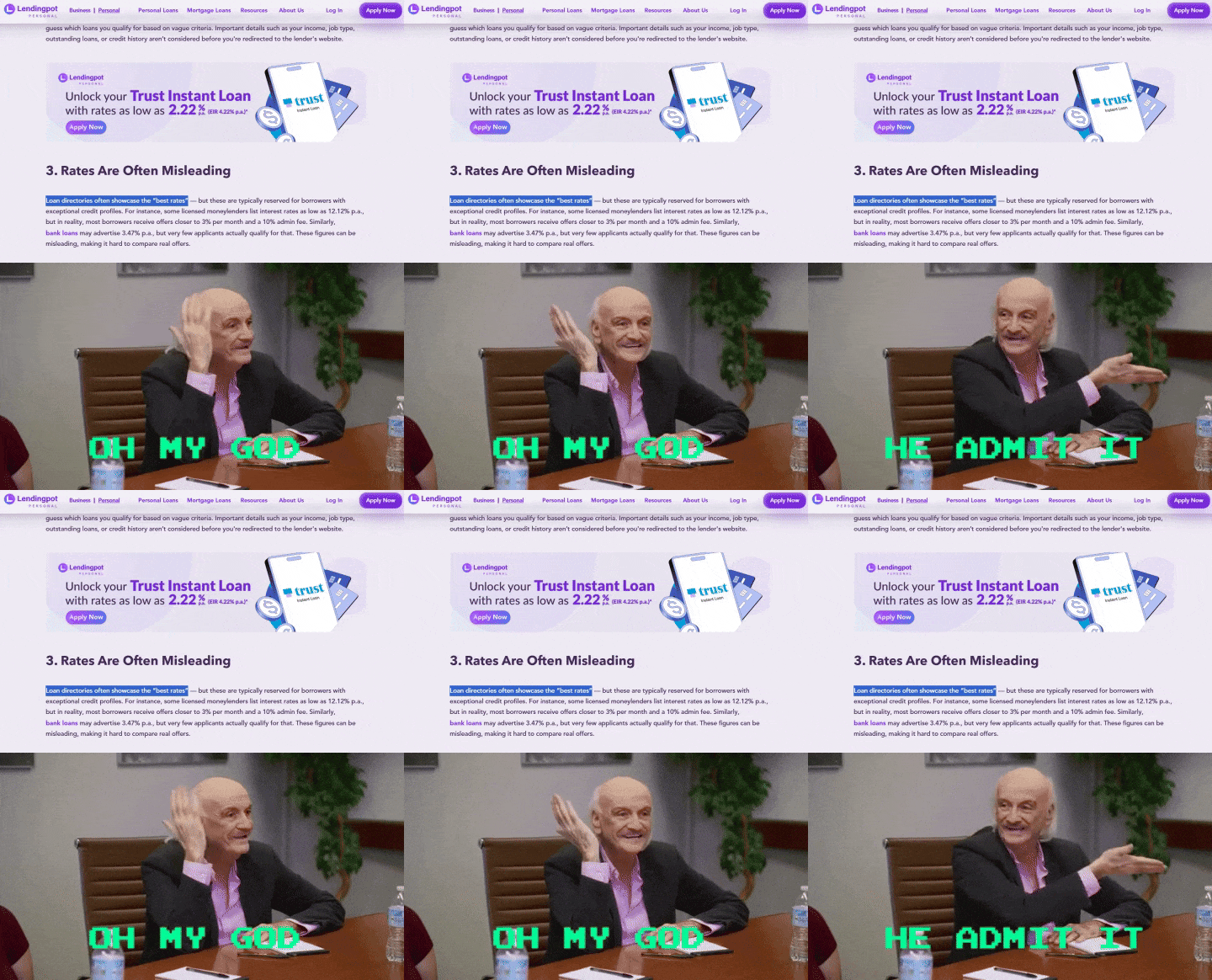
credit: Head of Lendingpot.
(We have no idea why Lendingpot is calling themselves out. But for more of their contradiction, click here! Interestingly, when we wrote about the conflict of interest if a broker is owned by a lender, they wrote the same a few months later, despite being owned by IFS Capital. )
That is probably why countries like China and India are clamping down on this and the following type of websites while in the US, such companies had to settle lawsuits with the FTC as there was no real comparison but actually pay-to-play listings instead of objective ranking. See examples of these lawsuits here.
Some Comparison websites
in the market work by using basic filters to narrow down which lenders "you should" speak to, but you still need to approach them one by one. Some go by pre-approved offers by pre-negotiating with lenders on a few broad sets of credit profiles via some basic questions. e.g:
Group A : 1%
Group B: 10%
Group C: Reject
However, that means if you could be charged at 1.1%, you would be charged at 10% . For example, if they only access you based on information from SingPass which does not process all the necessary information required for proper underwriting. You may notice the quantum offered tends to be lower as well due to the simplified underwriting process.
Some platforms provide a so-called "in-principle approval" "on behalf" of lenders. However, weaker borrowers often face rejection when they eventually meet the lender. This creates a false impression that the loan has been secured, only for borrowers to discover otherwise much later. For those in urgent need of financing, this delay can be frustrating and costly, which is why regulators are increasingly concerned about such practices.
FindTheLoan.com works differently, similar to like if you had applied with a lender directly with your full set of information since day 1, except you can choose to forward your application to multiple lenders at once, instead of having to fill out their forms repeatedly, with the lenders quoting you directly with actual loan offers after they have made a full credit assessment.
You could also use a loan broker,
especially if you have a good one you can trust. I mean, why go through all the trouble of visiting the lenders(or their websites) one by one, when someone can do the legwork for you?
However, that may bring you more issues than it is worth. It is an industry-known fact that loan brokers may not just cherry-pick which customers to prioritise, they may also cherry-pick which lenders' offer to only show you especially if they are owned by a lender, which some are. This is why countries such as the US introduced the Dodd-Frank Act, due to their unethical conduct that contributed to the 2008 mortgage crisis. However, many countries, such as Singapore, still do not regulate brokers, and we believe that using tech to remove them entirely from the equation is the better way to go and thus the purpose of this platform.
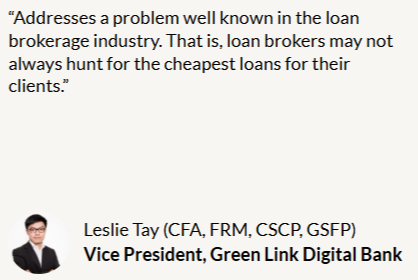
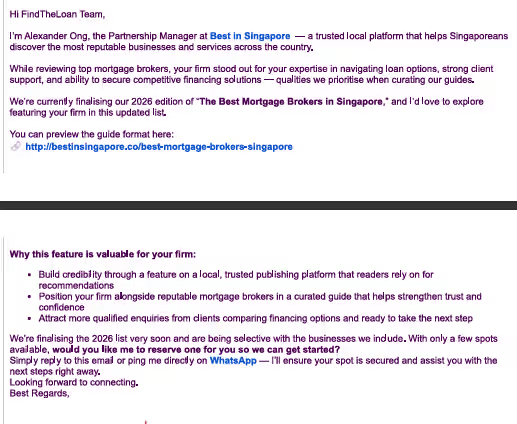
As there is no strict legal definition of a loan marketplace, a couple of other brokers claim to be one or a platform. But when you look closer, you will often find pages on their websites that there is a loan specialist/consultant to "assist you". Should you decide to use a broker, we recommend you read the article here on how to select a suitable loan broker and countries that have enacted laws due to the conflict of interest they bring.
What makes us uniquely different and 1st in the market is there are no humans in the process that may favor one lender or borrower over another.
See us like a CRM or tool where you send your enquiries directly to dozens of lenders with just one submission, who will compete to respond to you directly on the platform after assessing your application. Think we are biased against brokers? Well, check out this blog from one of our financing partners directly or this one from Forbes.
We used to be brokers—and we left that model behind for a reason: too many hidden incentives and too little transparency for borrowers. That’s why we built a platform that takes the middleman’s conflict of interest out of the equation entirely by taking the middleman out entirely.
--
If you enjoyed this article, we’d love for you to share it with others who might find it valuable. Even a quick like or comment here helps trigger the algorithm to reach more people! Our goal is to bring you insights that Big Finance doesn't want you to know, but they often get overshadowed by Big Finance's content due to the large budget they have. Every share helps amplify our work and reach more readers like you!
Subscribe to our LinkedIn newsletter here or on Medium here and never miss any new articles!
Give us a try — it’s free to get your personalized loan offers today!
Ask ChatGPT or Perplexity about this.
Learn how we keep our content accurate in our Editorial Policy.
Share on:
Blog Highlights
Recent Posts


Pinned Posts


We believe in sharing knowledge freely. Anyone — whether a company, website, or individual — may republish our articles online or in print for free under a Creative Commons license. (This applies to full republishing, not just casual sharing on social media — feel free to use the share buttons as you like!)
- All hyperlinks must be retained, as they provide important context and supporting sources.
- You must include clear credit with a link to the original article.
- If you make edits or changes, please note that modifications were made and ensure the original meaning is not misrepresented.
- Images are not transferable and may not be reused without permission.